A site-specific installation for and with Rubelli
On the occasion of Salone del Mobile, Rubelli presents Ai Weiwei: About Silk at its showroom in via Fatebenefratelli. This project dissolves the boundaries between art and textile expertise: an immersive installation born from the creativity of Chinese artist and activist Ai Weiwei.
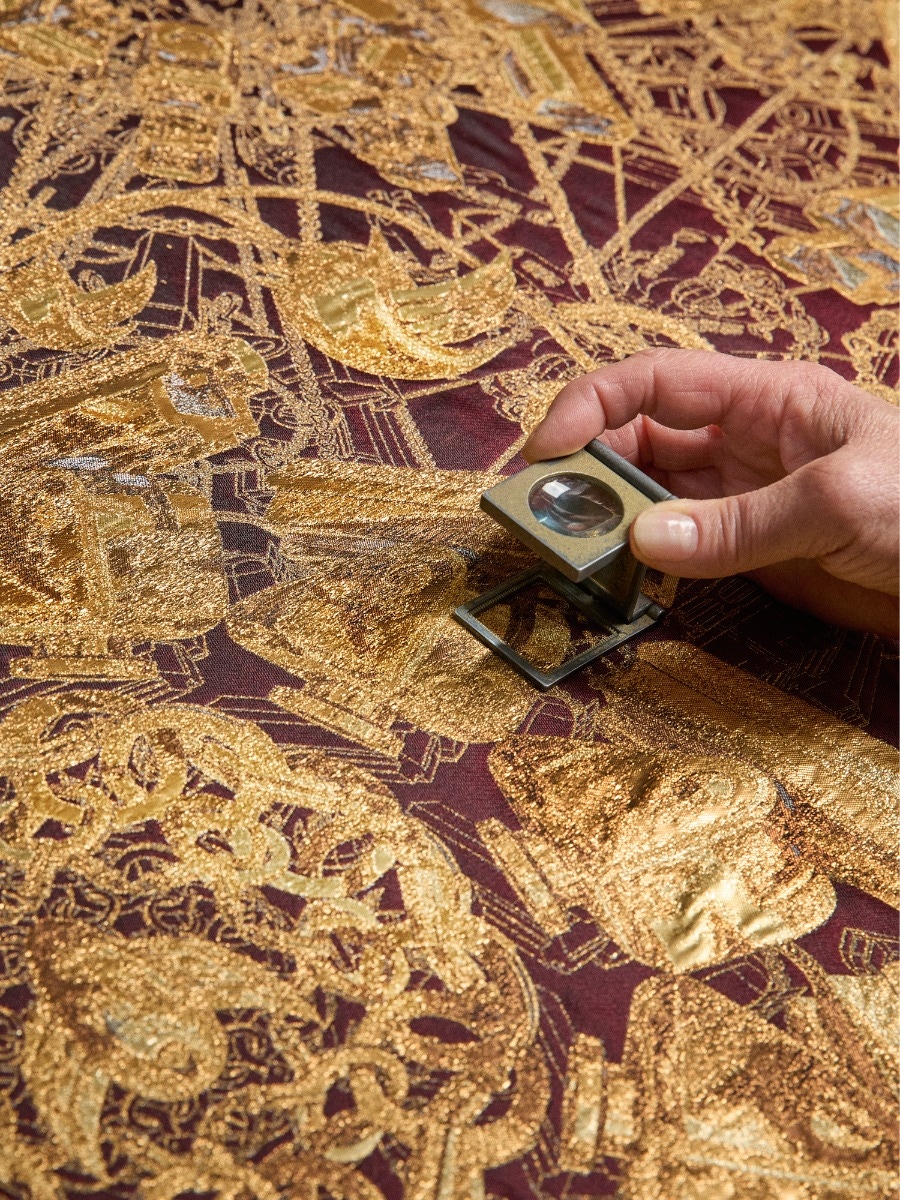
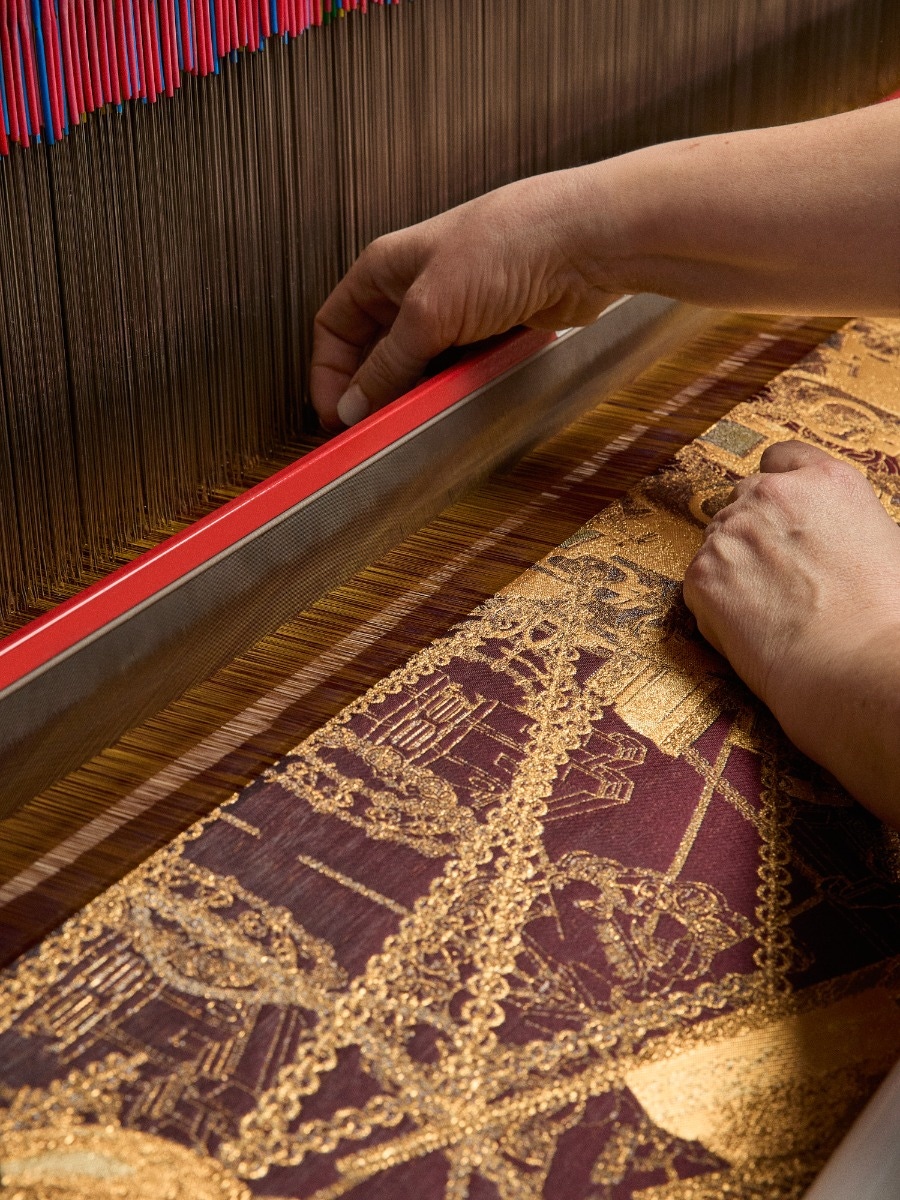
Upon entering the showroom, visitors find themselves surrounded by an elaborate silk lampas, where a dense weave of symbols traces the history and struggles of the Master. Rubelli has reproduced every element of Ai Weiwei’s original design, The Animal that Looks like a Llama but is Actually an Alpaca:
- Surveillance Cameras: A recurring motif in the artist's poetics, representing the omnipresent eye of power and a critique of social control, reflecting his personal experience under special surveillance for many years. In the fabric, these cold, geometric shapes are accentuated yet softened by the lustre of the metallic thread.
- Handcuffs and Chains: Symbols of oppression and of the artist's imprisonment, these acquire a soft, tactile three-dimensionality in the lampas, almost suggesting liberation through art
- The Twitter Bird: An icon of digital communication and freedom of speech, it plays a fundamental role in spreading messages beyond the reach of censorship.
- The Llama/Alpaca: Having become a symbol of freedom, dissent, and the fight against internet censorship in China, it represents the victory of irony and people’s creativity over rigid state control.
At the centre of the space - upholstered in the same elaborate silk lampas - stands a geometric form that reveals itself to be a sofa. Designed by Ai Weiwei himself, its converging lines and inclined planes surprise and deceive the viewer, appearing longer than it actually is.
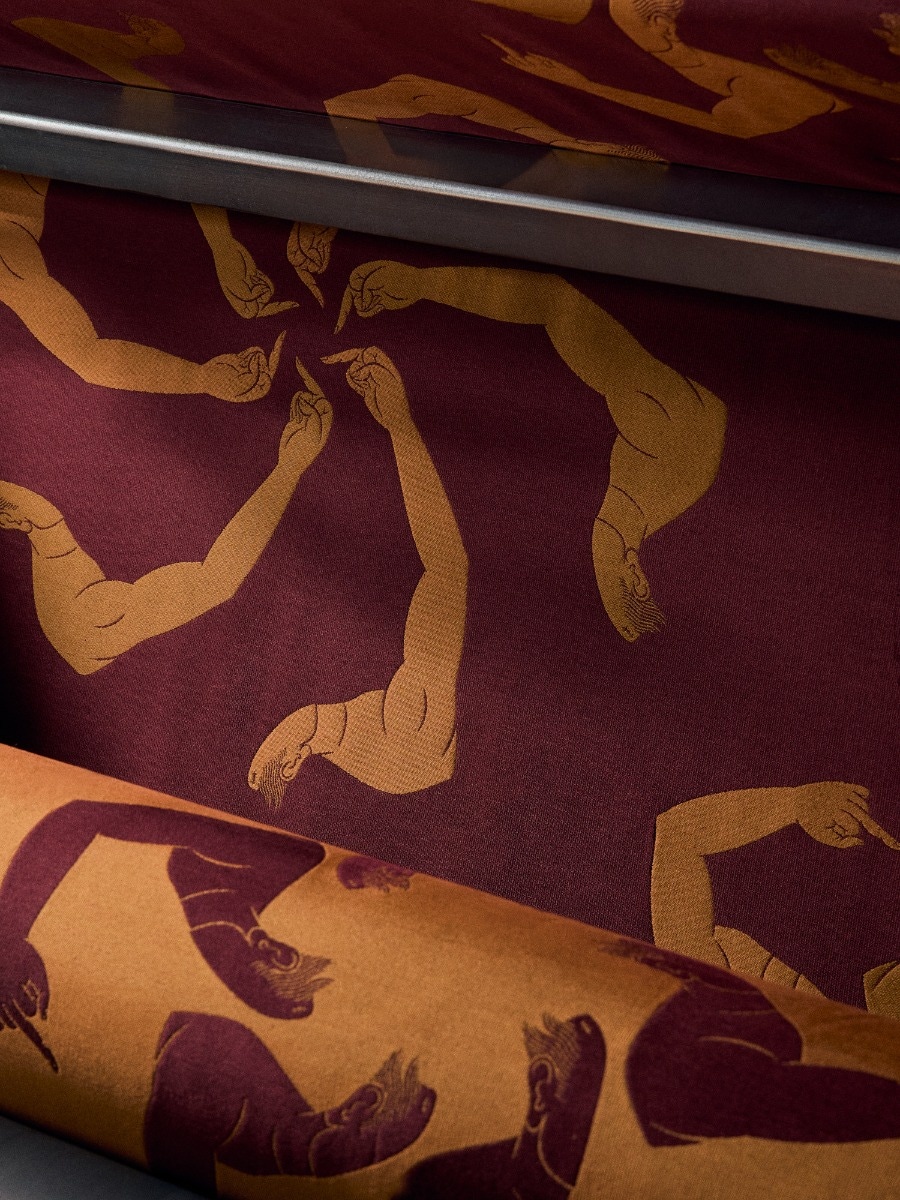
The installation continues with Finger, another iconic motif of the Chinese master. Created on the same warp as the previous lampas, the "Finger" fabric serves as a backdrop for two display cases containing textile documents from the Rubelli Historical Archive and the Rubelli Foundation.
In "Finger," the graphic irony of Ai Weiwei's famous gesture is interpreted through an essential yet refined textile structure: a silk and linen double-face that plays on colour inversion. On one side, the red background hosts the orange middle finger motif; on the other, the colours are reversed, giving the design a striking visual intensity.
For the first time, Ai Weiwei entrusts his message to silk - the very material that originated in China. In doing so, the artist links his socio-political message to the millenary tradition that connected his homeland to Rubelli’s Venice.
This noble fibre is also the protagonist of the two display cases - designed for the occasion by Formafantasma - which house ancient artifacts of extraordinary significance.
The first case features original Chinese documents in dialogue with 18th-century chinoiserie and early 20th-century productions, highlighting how Oriental aesthetics have influenced Western taste over the centuries.
The second case holds refined fragments of red silk and gold fabrics, mostly of Venetian manufacture. These works, dating from the late 15th to the 18th century, narrate the era when Venetian production dominated unchallenged.
Red, gold, and silk become tools of critical ambivalence in The Animal that Looks like a Llama but is Actually an Alpaca. The artist strips them of their celebratory aura and subverts their historical meaning: from symbols of authority to means of protest, from images of dominance to signs of resistance. Silk is no longer just ornament or precious commodity, but a vehicle for ideas.
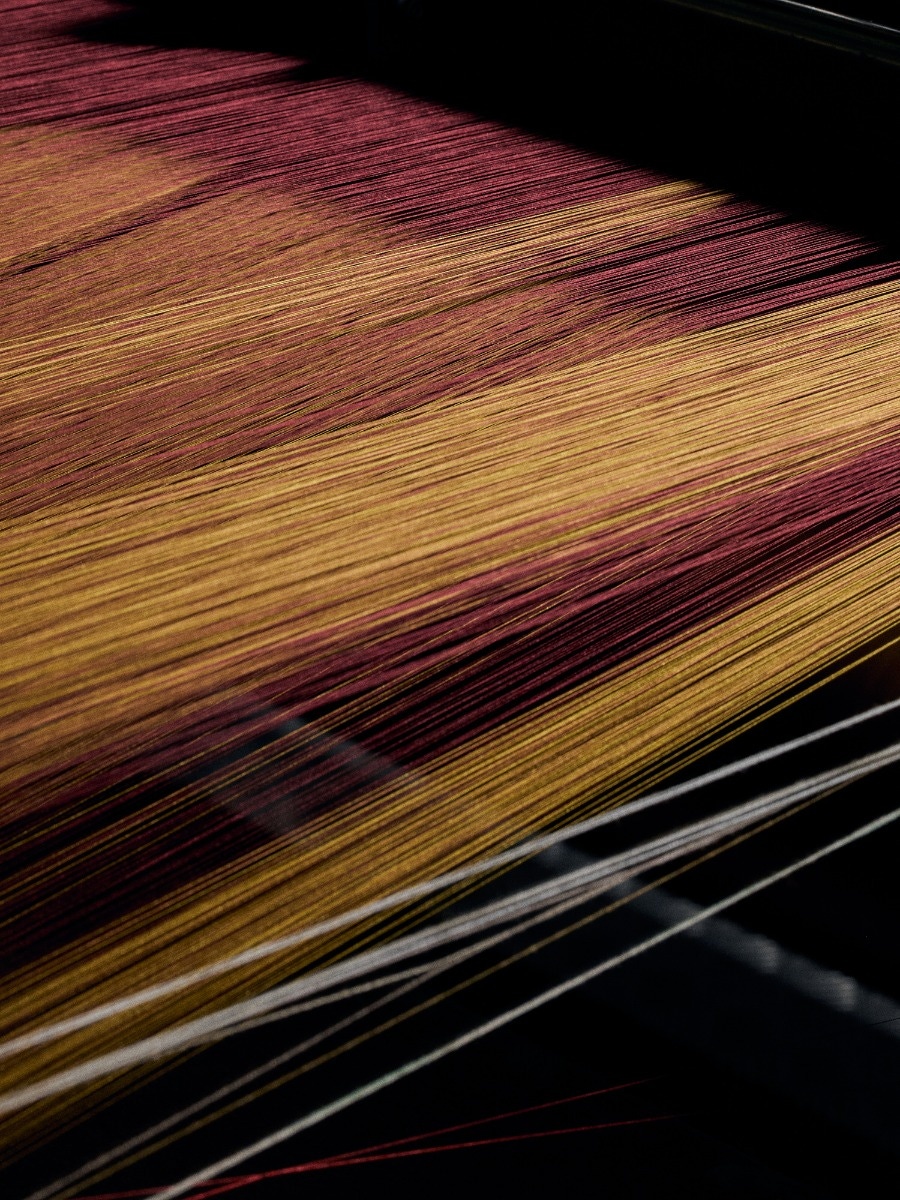
Enriching the immersive experience is an unreleased documentary film created for the occasion by Argentine director Felipe Sanguinetti. Filmed between the historic walls of Downing College, Cambridge, and the Rubelli weaving mill in Como, the film offers privileged access to the artist's poetics: Ai Weiwei explores the deep connection between his political vision and textile matter, revealing the most intimate keys to the project interpreted by Rubelli.
Continue reading about the historic display cases
Directions and openings
Rubelli Showroom
Via Fatebenefratelli, 9 – Milano
17 April – 15 May 2026
16-18 April 10AM–6PM
20-25 April 10AM–7PM – Register to skip the queue
27 April – 15 May 10AM–6PM. Closed on saturday and sundays.