
Our history
A history told by our fabrics, our projects, our meetings, our collaborations, our exhibitions, our awards, our commitment, our archives, our love of art.
And also Venice, which has always been our city.

Giovanni Paolo Rubelli is admitted to the Arte dei Mercanti della Seta in Venice, with his own shop.
Lorenzo Rubelli, grandson of Giovanni Paolo, father of Dante Zeno and great-grandfather of the current president Alessandro, is born in Venice.


Lorenzo Rubelli acquires the Venetian weaving mill G.B. Trapolin. Thus Gio. Battista Trapolin successore Lorenzo Rubelli is set up, defined in 1897 as 'undoubtedly the oldest and, we believe, the most renowned in the Veneto' and boasting prestigious supplies and orders from the outset.
Queen Margherita of Savoy, on the occasion of a visit to Venice, personally commissions from Dante Zeno Rubelli a precious silk soprarizzo on a blue background, in Art Nouveau style, decorated with daisies and the Savoy knot.


Rubelli crosses the borders of the city of canals and opens the Florence branch in the prestigious Via de' Tornabuoni. This is followed by Trieste, Rome, Milan, Turin, Genoa and Bari.
Alessandro Favaretto Rubelli, current president, son of Gino Favaretto and Gabriella Rubelli, Dante Zeno's eldest daughter, is born in Venice.


Rubelli exhibits many fabrics designed by artists and architect-designers such as Gio Ponti and Vittorio Zecchin at the International Art Biennale in Venice, underlining the contemporary focus of Rubelli production.
Alessandro Favaretto Rubelli joins the Rubelli Board of Directors.


The well-known Venetian designer label Roberta Di Camerino chooses Rubelli velvet for the production of its sophisticated bags, such as the Bagonghi, also worn by Princess Grace of Monaco. This is only the first of many prestigious Rubelli collaborations with the world of fashion design.
Rubelli opens its first foreign branch in Paris. Within a few years, with the opening of branches in London, New York, Munich and Dubai and thanks to a widespread distribution network, Rubelli establishes itself internationally.


Rubelli takes over the Zanchi mill in Cucciago (Como) where, alongside the latest generation looms, the 18th century hand looms of the original Venetian weaving mill are still in operation.
Production begins of fireproof fabrics for the world of hotels, theatres, shipyards and public places in general with specific safety requirements. In 1989 Rubelli supplies a cruise ship for the first time, the Princess, with technical fabrics. Thus the contract division comes into being.


Rubelli inaugurates the exhibition I tessuti di Benozzo Gozzoli in Florence, later staged in many major cities in Italy, Europe and the United States. Next to the Renaissance artist's frescoes a series of lampas and damask is displayed, reproducing the motifs and colours of the robes and saddle cloths depicted.

Alessandro Favaretto Rubelli is made a Cavaliere del Lavoro by Italian president Carlo Azeglio Ciampi.
Rubelli acquires the French company Dominique Kieffer. The strong point of the Kieffer by Rubelli collection is a simple, almost minimalist elegance, which manifests itself in the use of natural materials and shades of colour that are never predictable.


Rubelli joins Guggenheim Intrapresae, the corporate partnership programme of the Peggy Guggenheim Collection in Venice in support of the Museum. Rubelli has always supported art and culture with sponsorships, contributions and donations. Beneficiaries include the Fondazione Giorgio Cini, the Fondazione Arena di Verona, the Comité Français pour la Sauvegarde de Venise, Venetian Heritage, Save Venice and the FAI.
Rubelli donates fabrics for the La Fenice Theatre in Venice, rebuilt after the disastrous fire of 1996. Among the most prestigious textile restoration projects are the La Scala Theatre and Museum in Milan, the Albertina Museum in Vienna, the Palazzo Reale in Milan.


Rubelli signs a licence agreement with Giorgio Armani for the ARMANI/CASA Exclusive Textiles by Rubelli collection. Giorgio Armani's creative genius relies on Rubelli's expertise and more than a century of experience for his haute couture furnishing fabrics collections that seal the strong link between fashion and furnishings.
Rubelli creates fabrics for the Bolshoi Theatre. Over 12,000 metres of damask, lampas, brocatelle, velvet and technical fabrics leave the Cucciago mill for Moscow. The most demanding part of the work is the imposing curtain for which 500 kilos of pure gold yarn are used, developed by a highly specialised mill, unique in the world.


The TV series Game of Thrones based on the novels by George R.R. Martin goes on air on Sky channels and for which Rubelli supplied the fabrics for the costumes. Rubelli's collaborations with film and theatre productions in Italy and abroad are numerous.
At the 55th Venice Biennale Rubelli collaborates in the creation of two textile installations by Italian artist Marialuisa Taddei and Lebanese artist Marya Kazoun.


Rubelli launches its first furniture collection under the Rubelli Casa brand. Rubelli Casa introduces a first line of furniture, upholstered items and accessories, claiming its own original and unique space in the world of the home and furnishings, poised between modernity and tradition.
Sergio Mattarella presents the Leonardo Qualità Italia prize to president Alessandro Favaretto Rubelli.


Pila-47 is born, a textile armchair created exclusively for Rubelli by young designers Paolo Emanuele Nava and Luca Maria Arosio, founders of the Nava+Arosio Studio. A "mutant" seat that transforms from a pure geometric shape to a comfortable chair.
The Rubelli Foundation is set up with the aim of safeguarding and promoting the company's textile and cultural heritage. The Foundation's headquarters is Ca' Pisani Rubelli, a 15th-century palazzo that has been home to the Rubelli family since the mid-19th century and also houses the showroom.


Rubelli presents the first of several capsule collections, "Peter Marino for Venetian Heritage", designed by the famous American architect: 3 silk jacquards, all inspired by the city of canals. In 2020, the collection is awarded two major international prizes for the best fabric: the NYCxDESIGN and the EDIDA 2020 awards, the coveted Elle Deco International Design Award.
Rubelli creates Beyond, a rich silk lampas inspired by the work of American artist Claire Falkenstein, Entrance Gates to the Palazzo, at the Peggy Guggenheim Collection in Venice. Part of the proceeds from the sales go to support the Museum's activities.
To celebrate Venice’s 1600th anniversary, Rubelli dedicates SAN POLO to the city, a new damask in pure silk, glamorous and full of energy, "son" of the precious and evergreen SAN MARCO damask, in the collection for over a century.


RUBELLI dresses Bardi's Bowl, a chair designed by architect and designer Lina Bo Bardi and put into production by ARPER in a limited and numbered edition of 500 pieces. Bardi's Bowl is exhibited at the 17th. International Architecture Exhibition of the Venice Biennale.
Rubelli is technical sponsor of the event HOMO FABER. CRAFTING A MORE HUMAN FUTURE at the Fondazione Cini in Venice. For the "Pattern of crafts" project of the German designer Sebastian Herkner it develops and produces an ad hoc fabric inspired by the geometric motif of the churchyard of San Giorgio.


Rubelli presents at the FuoriSalone, in its Milan showroom, the first textile collection by Luke Edward Hall, "Return to Arcadia". The sketches of the young English designer produce a series of fabrics in attractive colours with floral subjects and classical elements.
Since September 2023, the creative direction of the Rubelli Group has been entrusted to Formafantasma, one of the most interesting design studios on an international level, founded by two intellectual and talented designers: Simone Farresin and Andrea Trimarchi.


The collection Untitled by KIEFFER wins the ELLE DECO INTERNATIONAL DESIGN AWARD 2024, the award that celebrates every year the best talents and projects in the various categories related to the world of design.
Rubelli international: if for Tiffany Wonder - an exhibition set up in Tokyo by Tiffany to celebrate its 187th anniversary - Rubelli created an extraordinary 70-meter tapestry as a backdrop to the exclusive creations of the well-known Maison, at the XXXIII Olympic Games it dresses with its own fabrics Casa Italia Parigi, a symbolic place chosen by CONI to welcome athletes and guests.


Rubelli, with a series of textile documents from various eras and all strictly red, is among the protagonists of the exhibition "Trame – The Red Runs Through the Thread": set up at the State Archives of Naples, the exhibition traces the symbolic and cultural evolution of the colour red through historical textiles and documents.
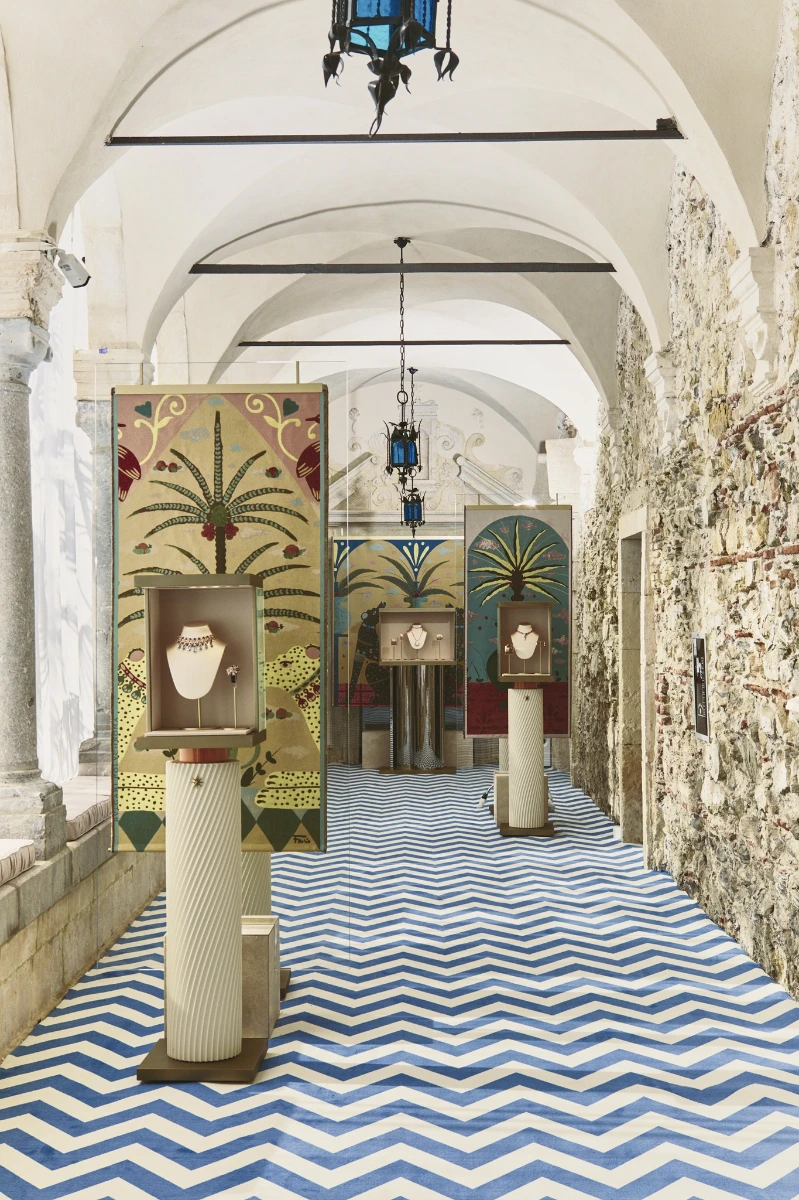
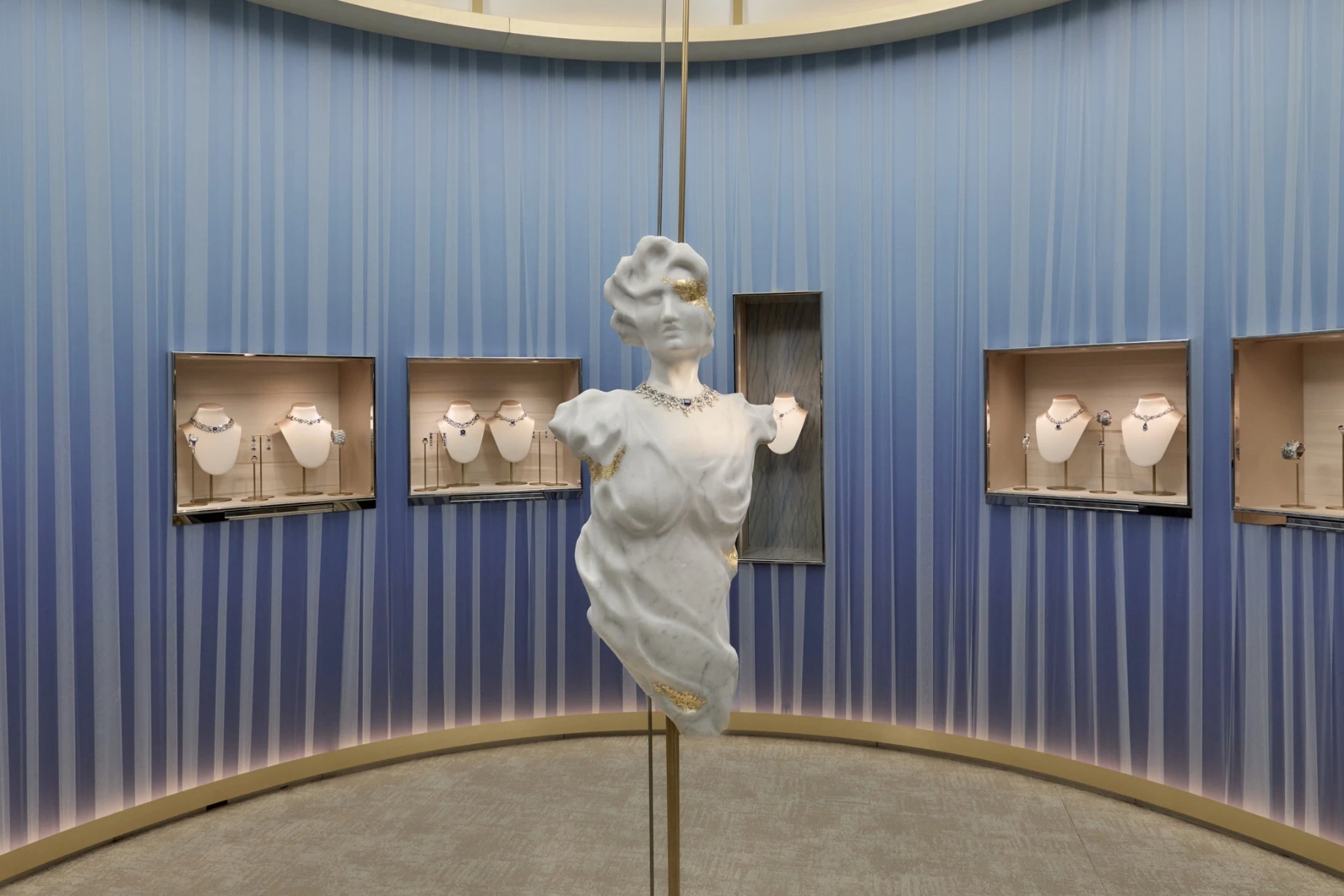
Rubelli creates 12 extraordinary tapestries for Bvlgari — inspired by the works of contemporary artists Alessandro Florio and Zach Lieberman — on the occasion of the launch of the new “Polychroma” high jewelry collection in Taormina, reaffirming its role as textile partner of the renowned maison.
